September 29, 2026 · 5 min read
Measure apartment advertising from inquiry to tour to signed lease
Build an apartment advertising funnel that separates inquiries, scheduled tours, completed tours, and signed leases with transparent acquisition math.
By the AdvisorPPC Team · Reviewed by Claude
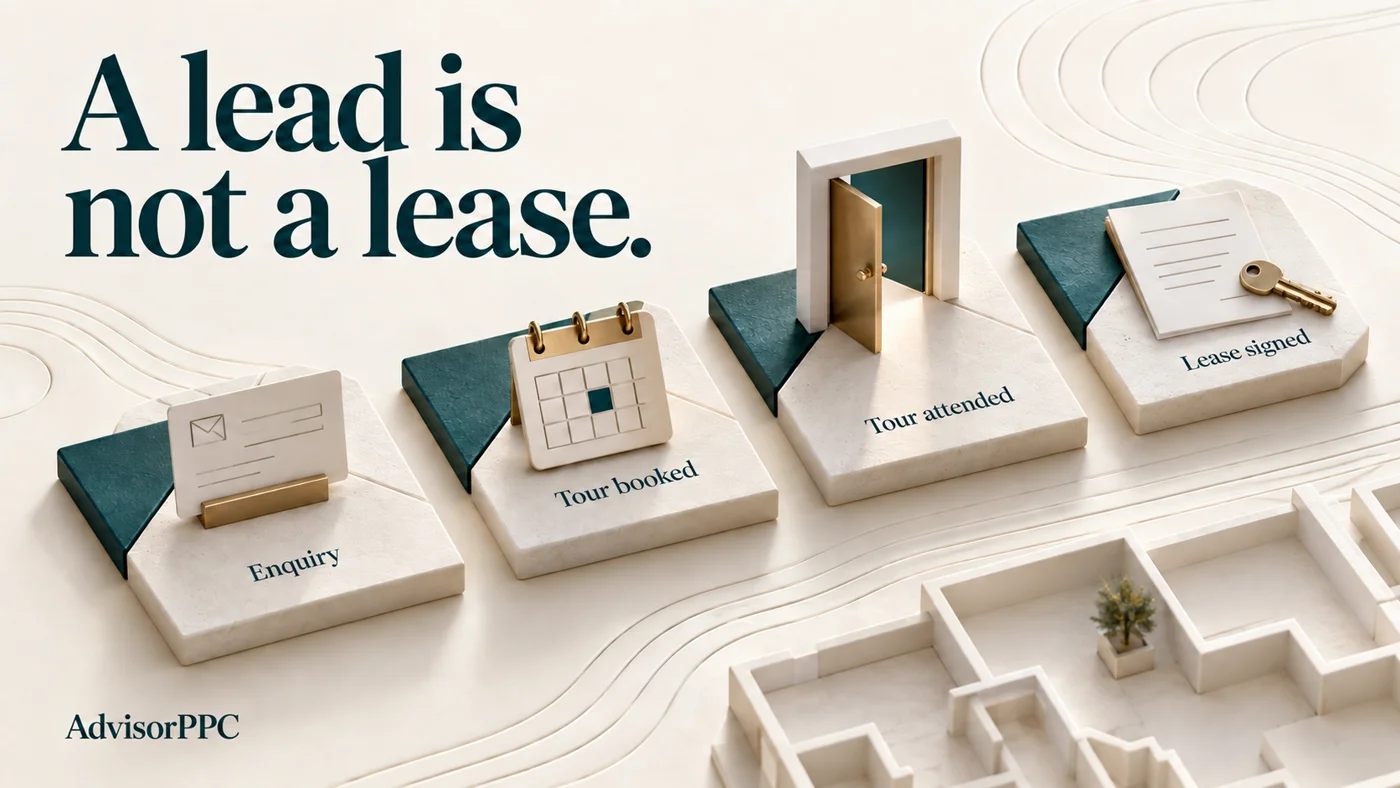
Apartment advertising should be evaluated against the leasing process the property actually operates. An inquiry indicates interest. A scheduled tour indicates a next step. An attended tour gives the leasing team an opportunity to discuss the property. A signed lease is a separate outcome with its own timing and conditions.
Put those stages into one dated funnel before comparing channels or raising spend. The purpose is to locate where suitable inquiries stop progressing and calculate acquisition costs honestly. It also prevents a report from presenting every form submission as a filled unit.
Agree on stage definitions
Decide what qualifies as an inquiry and how duplicates are treated. Define a scheduled tour as an agreed appointment, not a click on the calendar. Define an attended tour using the leasing team's records. State what counts as a signed lease and whether cancellations or other reversals change the reported total.
Use a consistent cohort. Inquiries arriving this week may produce leases later, so a calendar-week comparison can mix mature and unfinished opportunities. A stage report should state both the inquiry period and the date through which outcomes are observed.
Google explains the distinction in About qualified leads and converted leads. Those categories are useful only when the business supplies consistent definitions and outcomes.
Separate serviceability from protected-trait assumptions
A useful inquiry is one the property can respond to concerning an available offering. Operational facts such as a requested move-in date, currently available unit type, and contactability can help the team organize work. Marketing qualification should not quietly introduce discriminatory assumptions.
Keep leasing requirements and application decisions in the property's approved process. This article describes measurement, not eligibility criteria or legal advice. The team should review its forms, audiences and wording against requirements applicable to the property and campaign.
Record why an inquiry could not progress using a small approved list. “No suitable unit available” is actionable in a way that an unexplained “bad lead” label is not.
Work through a hypothetical funnel
Assume a property spends $1,200 on advertising during a defined inquiry period. It receives 60 unique inquiries. Twenty-four tours are scheduled, 18 are attended, and six leases are signed by the chosen observation date.
The calculations are:
- Cost per inquiry: $1,200 divided by 60, or $20.
- Inquiry-to-scheduled-tour rate: 24 divided by 60, or 40%.
- Scheduled-to-attended-tour rate: 18 divided by 24, or 75%.
- Attended-tour-to-lease rate: six divided by 18, or about 33%.
- Attributed advertising cost per signed lease: $1,200 divided by six, or $200.
These hypothetical numbers are not industry benchmarks. The last figure depends on the stated attribution method and includes advertising only. It excludes leasing labor, concessions, and other acquisition costs.
If another six inquiries remain active, label them open instead of treating them as unsuccessful. Update the cohort when the observation window matures.
Diagnose one stage at a time
A low inquiry-to-tour rate may reflect unavailable units, slow follow-up, unclear prices, or unsuitable move-in dates. A low attendance rate suggests a different investigation: confirmation wording, directions, scheduling conflicts, or a difficult rescheduling process.
A low tour-to-lease rate needs property-specific discussion. Do not automatically change keywords because a person chose a different property. Review the information promised before the tour, current availability, application process and documented feedback.
Our guide HighLevel Agency Conversion Tracking: From Lead Count to Revenue provides a broader framework for keeping business stages separate. For apartment leasing, the tour is an important intermediate event, while a signed lease should retain its own definition.
Keep source information without overclaiming causality
Attach an observable source to an inquiry when the measurement setup permits it. Record unknown sources honestly. People can encounter several channels, and a reported attribution model selects credit under particular rules.
Attribution does not prove that the lease would not have happened without advertising. Google's guide About Conversion Lift describes controlled measurement of incremental outcomes; availability and sample requirements matter.
A small property can still use cohort comparisons as operational evidence. It should describe them as observational rather than calling every change in lease count advertising lift.
Build a mobile-friendly leasing worksheet
Use one card per stage, with the count, definition and owner. Add the inquiry cohort, observation date, property or unit group, source method and open-opportunity count. Keep identifiable applicant information in the approved leasing system, not in a public report.
A weekly review should answer:
- Is there inventory for the advertised move-in period?
- Are inquiries receiving the promised response?
- Are tours being confirmed and attended?
- Which opportunities are still open?
- Which lease outcomes can be reconciled?
The guide Why Your Google Ads Conversion Numbers Keep Changing explains why immature windows can mislead campaign decisions.
Decide what bidding should pursue
Inspect the conversion actions selected by each campaign before changing them. A form submission and a lease-related outcome should not receive the same treatment by accident. The guide Google Ads Primary vs Secondary Conversions: Decide What Bidding Should Value explains the custom-goal exception as well as ordinary settings.
First validate the stage data. Then discuss any proposed configuration change with the account owner and keep a record of the intended outcome.
Bring the leasing worksheet to an account review and consult current AdvisorPPC access options. A useful recommendation should connect the campaign evidence with available units and a specific funnel problem.