August 26, 2026 · 8 min read
PPC Change Receipts: Prove What Automation Published
A PPC change receipt binds authorization, execution, provider response, verification, and rollback to one traceable account action.
By the AdvisorPPC Team · Reviewed by Claude
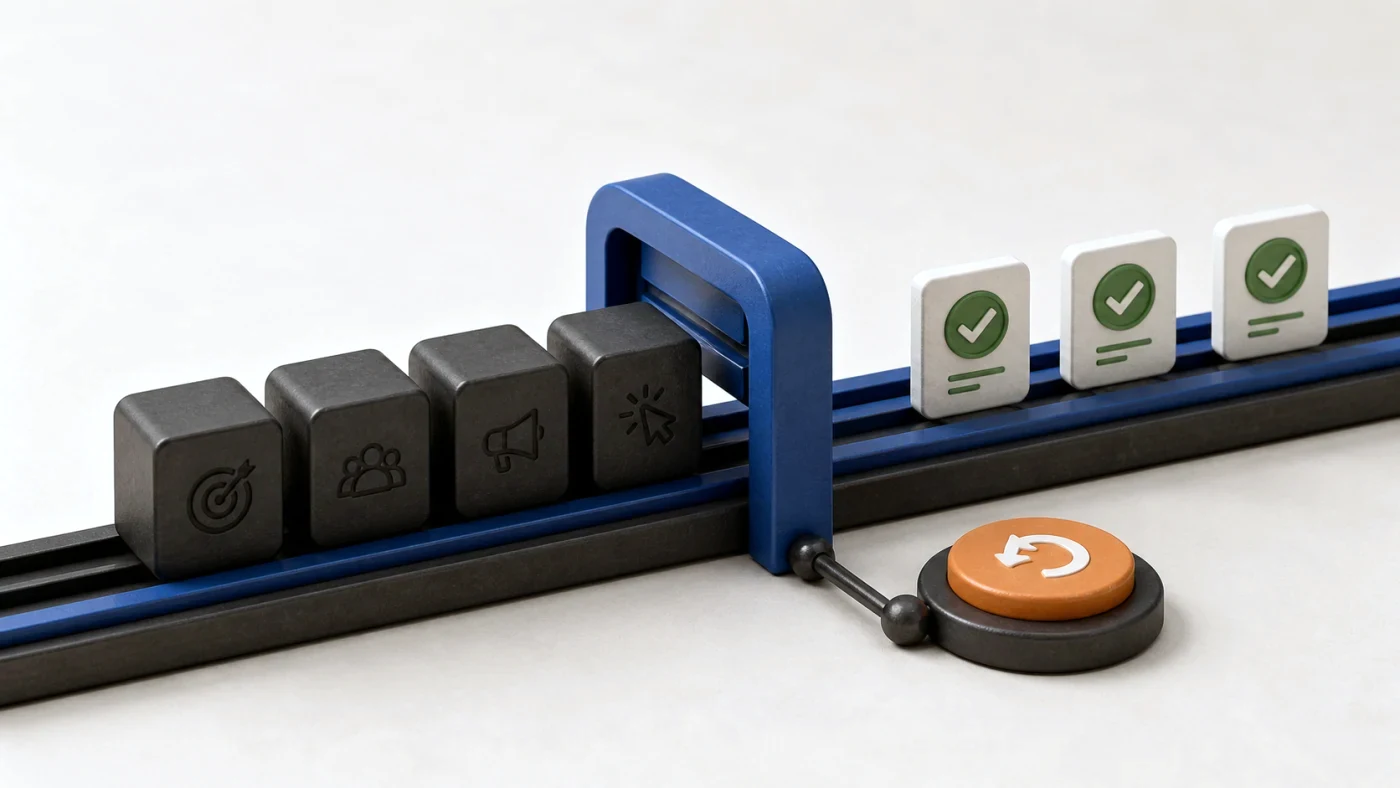
A PPC change receipt is the durable record that connects a policy or approval to one external action and its verified result. It names the customer and account, captures old and new values, records the provider request identifier, confirms the read-back state, and preserves a rollback path. A success message alone is not an audit trail.
Why does every automated write need a receipt?
Automation can retry, time out, partially succeed, or act after the account changed. Without one durable record, operators cannot tell whether a recommendation stayed a draft, an API accepted a write, or the provider ultimately stored it. Keep these states separate, as described in approval gates for AI PPC agents.
Provider history is a valuable independent check. Google's Change History documentation explains which changes can be reviewed in the account. Your own receipt must also retain the business reason, governing policy, and verification evidence.
What belongs in the receipt?
- Tenant, provider, customer, account, campaign or object identifiers.
- Policy or approver, authorization scope, issue time, and expiry.
- Exact operation plus old and proposed values, including currency and time zone.
- Idempotency key, attempt number, provider response identifier, and timestamps.
- Read-back result, verification status, evidence location, and rollback operation.
How should automatic publishing be authorized?
An owner can create a standing policy for low-risk own-site publishing: named domain and repository, permitted content types, daily limit, quality gates, allowed model lanes, and stop conditions. Each run still receives a unique receipt. The policy should never silently expand into ad-account writes, provider submission, access grants, billing, or deployment of unrelated code. Any write that does reach Google Ads still has to clear the platform's own Ads API authorization model, which is a separate gate from the receipt policy described here.
A useful publishing policy can require the same quality checks used for landing-page message match: one clear answer, truthful metadata, working links, a registered image, and a stable canonical URL.
What happens after the provider responds?
Read the object back from the authoritative system. Confirm the expected field, status, URL, version, or timestamp rather than treating a transport-level success as completion. If verification cannot resolve the outcome, mark it unknown and stop retries until reconciliation prevents a duplicate action.
For routine review, pair receipts with a Monday account pass and the account's native history. That creates a short operational loop: propose, authorize by policy, execute once, verify, record, then watch the result.
How should rollback work?
Store the previous value and the exact compensating operation when one exists. Rollback is a new governed action, not deletion of the original receipt. For published content, preserve the prior revision and canonical URL; for mutable ad settings, re-check the current value before restoring anything so another operator's later work is not overwritten.