August 30, 2026 · 8 min read
Data-Driven Attribution: Why Your Conversion Counts Moved
Understand how data-driven attribution spreads credit across the path, why conversion counts shift with no real change, and how to compare periods fairly.
By the AdvisorPPC Team · Reviewed by Claude
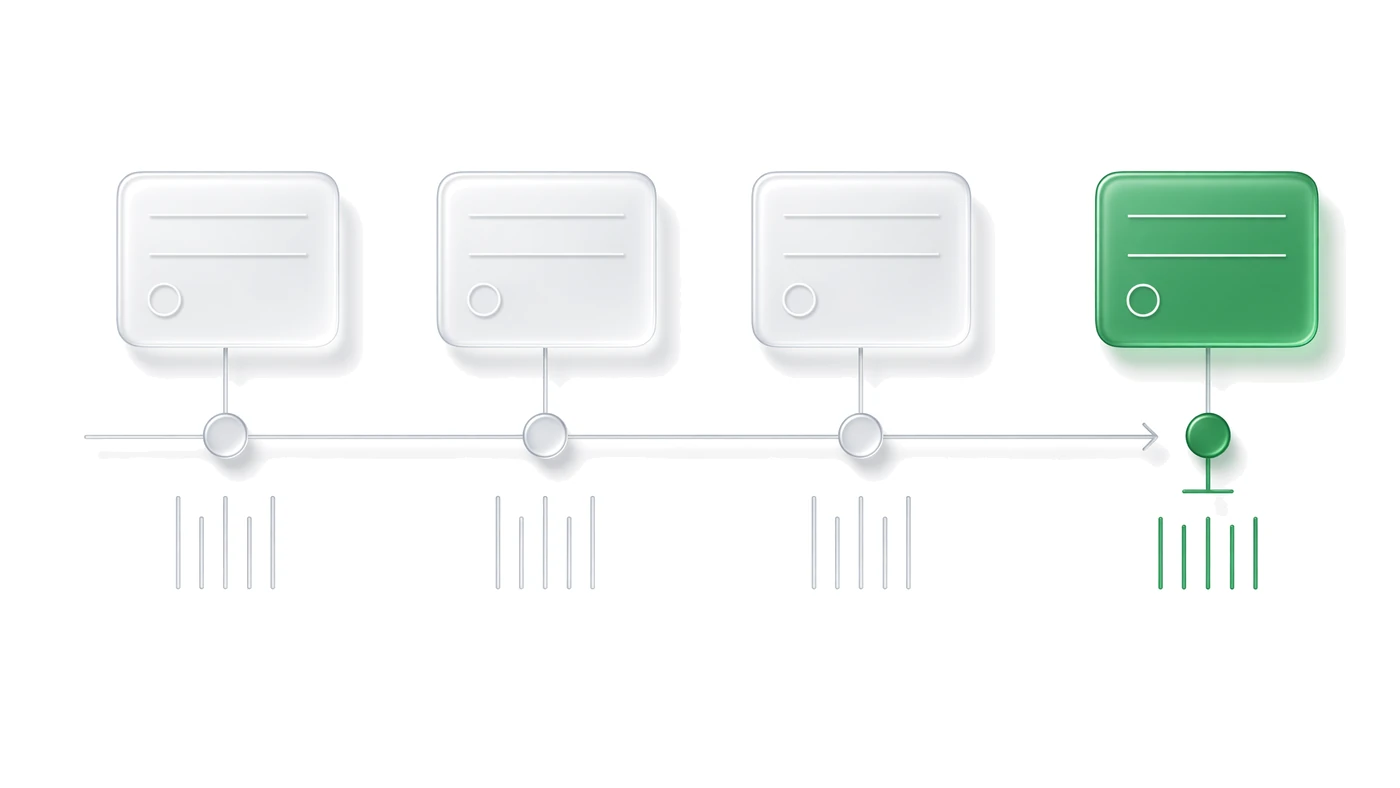
Data-driven attribution became the default model for Google Ads conversions, which means most accounts are now crediting the whole click path instead of the last click, and a conversion count that moves after the switch is not evidence that performance changed. Read the path credit correctly before you tell a client their campaign got better or worse.
What actually changed when data-driven attribution became default?
Google retired first-click, linear, time-decay, and position-based attribution models, and now assigns new conversion actions to data-driven attribution unless you actively choose last-click. The shift was announced directly by Google as the default for attribution, and it applies across Search, Shopping, Display, YouTube, and Demand Gen conversions that qualify.
Accounts that never touched their attribution setting were migrated automatically. If your reporting shifted on a date you did not choose, that migration is the most likely cause, not a change in how conversions are counted at the tracking level.
How does data-driven attribution actually spread credit?
The model compares the paths of people who converted against the paths of people who did not, and looks for which ad interactions appear more often in the converting group. Interactions that show up disproportionately in successful paths get more credit, wherever they sit in the sequence. An ad that a customer clicked early in a multi-touch path can now get meaningful credit even though it was never the last click before conversion.
Google's own explanation of the data-driven attribution model lays out the comparison logic and which conversion sources it covers. It is account-specific: your model is trained on your paths, not a shared industry curve, so two accounts in the same vertical will not distribute credit the same way.
Why does the conversion count move without performance moving?
Switching models redistributes credit for the same underlying conversions, it does not create or destroy them. A campaign that used to get zero credit under last-click because it was always the first touch can suddenly show conversions it was always contributing to, while the campaign that used to get all the credit as the closer now shows fewer. Total conversions across the account should be roughly stable. What moves is which campaign, ad group, or keyword the credit lands on.
This is exactly why a Target ROAS or Target CPA strategy can look like it is chasing a different number after the switch, even with no bid strategy change on your end. The strategy is optimizing to the same goal, but the conversions it sees credited to each keyword shifted under it.
Does the model need a minimum amount of data to work well?
Google recommends at least 200 conversions and 2,000 ad interactions across supported networks within a 30-day window for the model to find reliable patterns. Below that, the model still runs, but with less data to compare converting and non-converting paths against, so the credit split is less stable month to month.
- Low-volume accounts should expect more month-to-month swing in per-keyword credit, not less
- A new conversion action starts with no path history, so its first weeks of data-driven credit are the least reliable
- Combining thin conversion actions into one primary action can restore enough volume for the model to stabilize
If your account sits near that threshold, treat primary versus secondary conversions as a lever for giving the model more data to work with, not just a reporting cleanup task.
How do you compare before and after honestly?
Do not compare a last-click month against a data-driven month and call the difference performance. Pull both periods under the same model before judging trend. Google's Switch to DDA guidance covers how the transition is reported and what changes retroactively versus what only applies going forward.
The cleanest comparison is period over period under the current model on both sides, the same discipline you would apply to reading experiment results for any other metric that moved for a reason unrelated to account performance. If a client needs a same-model historical baseline, say so up front rather than let a raw dashboard number imply a swing that never happened.
What should you tell a client when the numbers shift?
Name the cause specifically: the attribution model changed, not the account. Show which campaigns gained credit and which lost it, and confirm the account-wide total held roughly steady. That framing turns a confusing dashboard swing into an explainable one, and it keeps the conversation on real performance signals like cost per acquisition and lead quality instead of a redistribution artifact.
Pair that explanation with a look at GA4 key events versus Google Ads conversions if the client is also watching a second reporting surface, since the two systems will not always move together after a model change on one side only.
A conversion count that moves after a model switch is a credit reshuffle, not a performance change. Compare periods under the same attribution model, and check the account-wide total before reacting to any single campaign's swing.