July 18, 2026 · 5 min read
What Is Quality Score, and Why Is It Costing You Money?
Quality Score decides how much you pay per click. Here is what it measures, why a low score inflates costs, and how AI managers propose controlled fixes.
By the AdvisorPPC Team · Reviewed by Claude
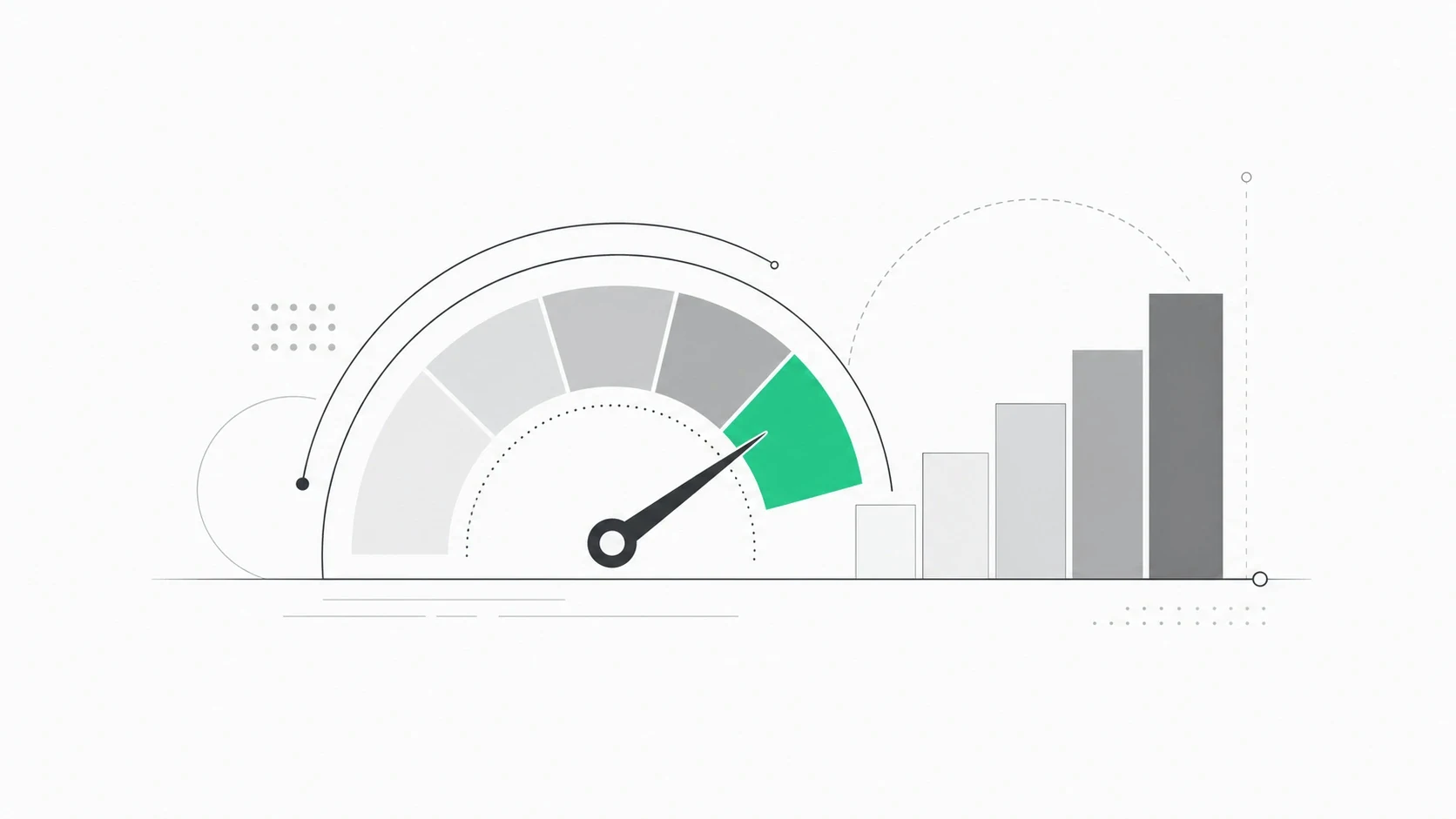
There is a number inside your Google Ads account that most small business owners never look at, and it quietly decides how much every click costs. It is called Quality Score. Two advertisers can bid the same amount for the same search, and the one with the higher Quality Score pays less and shows up higher. Nothing about that is visible on the surface. It just looks like one account is lucky and the other is expensive.
Understanding this one number changes how you read your whole account. A low Quality Score is not a cosmetic problem. It is a tax you pay on every click, forever, until someone fixes the cause. Here is what it measures, why it matters, and the mechanism that raises it.
What Quality Score actually measures
Quality Score is Google's estimate, on a scale of 1 to 10, of how relevant and useful your ad is to the person searching. It is built from three parts, and each one answers a plain question. Google's own Quality Score definitions page names the same scale and the same three components.
- Expected click-through rate: when your ad shows for a search, how likely is someone to click it compared with rival ads in the same spot?
- Ad relevance: does the wording of your ad actually match what the person typed, or is it generic?
- Landing page experience: once they click, does the page they land on answer the search, load quickly, and make the next step obvious?
You can see the score, and each of its three parts, on the keyword table in your account once you add the columns. Most owners never do, which is exactly why the number sits there unwatched while it shapes the bill.
Why a low score quietly inflates your costs
Google does not simply sell the top ad spot to the highest bidder. It ranks ads by a combination of your bid and your Quality Score, then charges the winner roughly what it takes to beat the ad below them. Google's own explanation of how the Google Ads auction works confirms bid is only one of the factors. The practical effect is direct: a higher Quality Score buys a better position for less money, and a lower one forces you to bid more just to hold the same place.
The gap is not small. An account with strong scores can pay a fraction of what a weak account pays for the identical click on the identical search. So when your cost per click feels stubbornly high, the bid is often not the real problem. The score behind it is. Raising the bid treats the symptom and makes the account more expensive. Raising the score treats the cause and makes it cheaper.
The most common reason scores stay low
The usual culprit is structure, not effort. Many accounts pile dozens of loosely related keywords into a single ad group pointed at one generic ad and one generic landing page. A plumber might have "emergency plumber", "drain cleaning", and "water heater repair" all sharing the same ad that says only "Trusted Local Plumbing". None of those searches gets an ad that speaks to it directly, so ad relevance suffers and expected click-through rate drops with it.
The fix is to group tightly. Keywords about water heaters get their own ad group, their own ad that mentions water heaters, and ideally a landing page about water heaters. Each search then meets an ad and a page built for it. That single change lifts all three components of the score at once, and the auction rewards it with lower prices.
Where owners usually go wrong
Two mistakes are common. The first is chasing Quality Score as a trophy. It is a diagnostic, not a goal. A score of 10 on a keyword that never books is worthless, and a score of 6 on a keyword that fills your calendar is fine. Use it to find the weak spots dragging your costs up, not as a scoreboard to max out.
The second is ignoring the landing page. Owners rewrite ad copy endlessly while sending every click to a slow, cluttered homepage. If the page does not load fast and answer the search, no amount of clever ad wording will save the score, and it will not save the conversion either. The page is half the battle and usually the neglected half.
How the AI managers work the score
Quality Score is a slow, patient number, which makes it a good fit for daily attention rather than a quarterly cleanup. AdvisorPPC's AI managers start where it is safe to start: the Auditor reads your account without changing anything and reports which keywords carry low scores, which of the three components is dragging, and which ad groups are too broad to ever score well. You see the real cause, in plain English, before a single thing moves. Start your free account audit.
From there the Optimizer proposes the specific fixes: splitting a bloated ad group into tight ones, rewriting an ad so it matches the search, flagging a landing page that undercuts every keyword pointing at it. These are the same structural moves that recover wasted spend, because a cheaper click and a more relevant click are usually the same click. It is also why a well-run account beats a set-and-forget one over time: the score compounds when someone tends it.
Quality Score fixes stay approval-gated
Here is the part that keeps this safe on a live account. Every one of those proposals is shown to you before it runs, with the reasoning and the expected effect attached. Restructuring an ad group, swapping ad copy, pausing a keyword: each waits for your yes, and each approved change lands in the worklog with its explanation. You are never handed a lower Quality Score you cannot trace back to a decision you made.
The number is invisible until someone shows it to you. Once you can see it, and see what moves it, the account stops feeling expensive for no reason. Start your free account audit and inspect your own scores first. The clicks were never priced by luck. They were priced by a number you were not shown, and it can be fixed one approved change at a time.
AdvisorPPC's AI managers are built using the Claude API from Anthropic. AdvisorPPC is not affiliated with or endorsed by Anthropic.