July 18, 2026 · 4 min read
Why Approval Still Matters
The safety model behind AI-run ad spend: Manual by default, bounded Auto by choice, explicit budget and bid approval, and a logged worklog.
By the AdvisorPPC Team · Reviewed by Claude
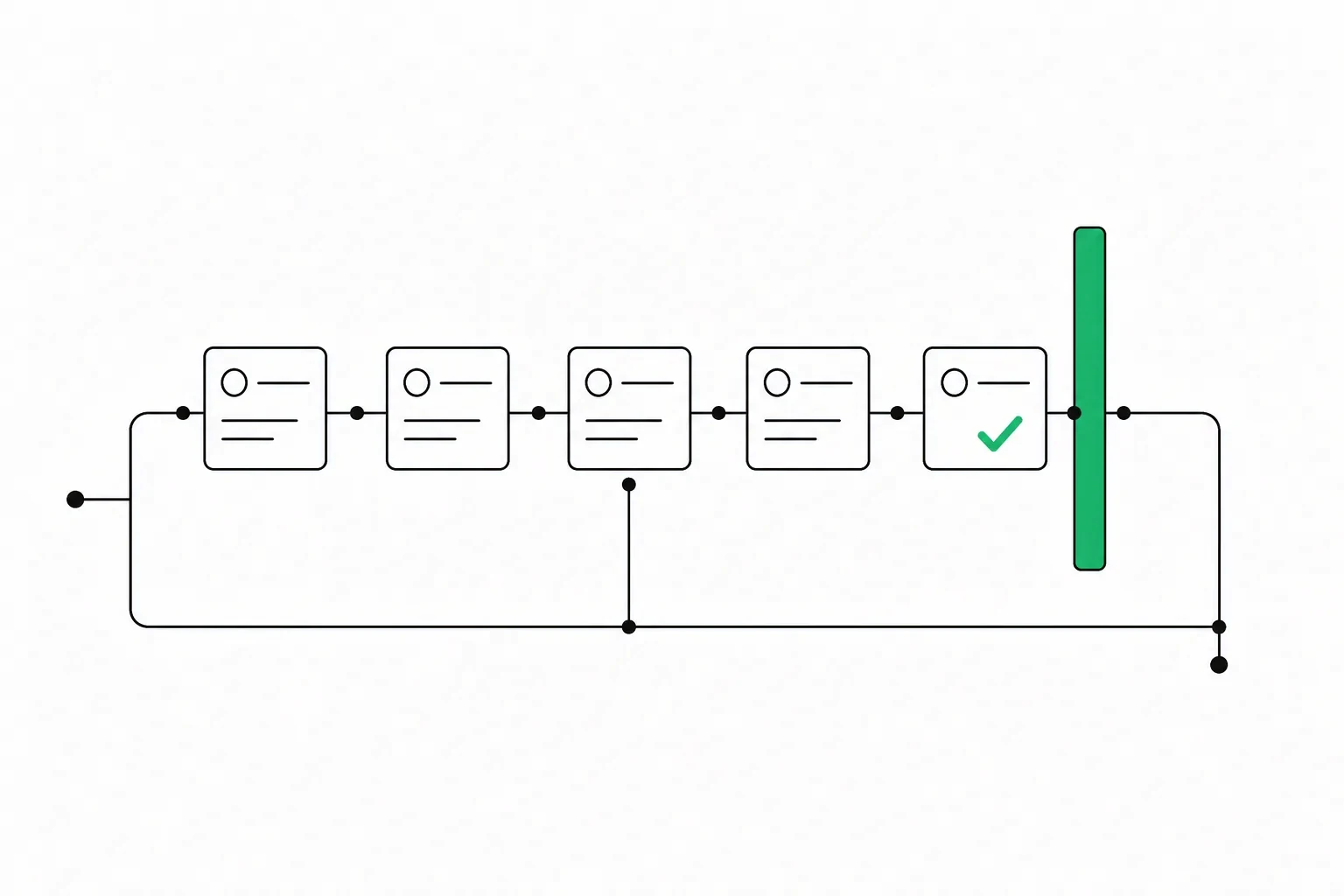
The fastest way to lose money in advertising is an automation you cannot see or stop. That single fear is why most business owners hesitate to let AI near their ad spend, and it is the right instinct. An account that changes on its own, with no record and no brake, is a liability no matter how capable the model behind it is.
AdvisorPPC is built around visible controls. Manual is the default and asks before every write. An admin or owner can optionally enable bounded Auto for reversible campaign pause or enable actions and negative keywords inside selected-account guardrails. Budget, bid and higher-risk changes still wait for explicit approval. The AI managers do the daily work within those controls.
Two kinds of action
Start with a distinction the AI managers are built around. Reading an account and changing an account are not the same act, and they do not carry the same risk. Reading is safe. The Auditor reads your account and never writes to it; it scans for wasted spend, tracking gaps, and structural problems, and reports what it finds. Writes must clear role, account and spending guardrails before they ever reach the account through Google's own Ads API authorization model. Manual asks first. Bounded Auto covers only the eligible reversible actions named above.
The approval rail
Every state-changing action is described and logged. In Manual, it waits for your decision. In bounded Auto, an eligible campaign-status or negative-keyword change can run only after the role, selected-account and safety checks pass. Budget and bid changes are never eligible for Auto and always wait for your sign-off.
Every proposal is a dry-run first
When approval is required, you see exactly what the change would do. Not a vague request for permission, but a specific action: a budget shift from one campaign to another or a bid lowered from one figure to a lower one, with the expected impact stated. Bounded Auto actions are also named and logged, so they stay visible and reversible.
The worklog is the audit trail
Every change that runs is recorded in a plain-English worklog: what changed, why, and the expected result. Nothing is a black box. Because each action is written down, it can be traced back and reversed. You can read the account's whole history the way you read a bank statement, and any change that did not do what it promised can be undone.
Google Ads keeps its own record of account edits too, and it is worth reading alongside the worklog rather than instead of it. The platform's Change History documentation explains what the native log captures. It confirms that a write happened; it does not carry the business reason behind it, which is why the worklog keeps its own plain-English record next to that native log.
What stays human
The division of labor is the point. The guardrails are yours: your budgets, your targets, your scope. The AI managers bring the daily labor and analysis. You keep explicit control of budgets, bids and higher-risk decisions, and you can choose Manual whenever you want every write to stop for approval. The full mechanics behind binding a policy, an authorization, and a verified result together are covered in approval gates for AI PPC agents.
Safety and results are not a trade
The useful trade is not speed versus safety. It is choosing the right control for each action. Audits can read freely. Bounded reversible actions can run inside Auto guardrails. Budgets, bids and higher-risk changes keep the explicit checkpoint they deserve.
That is the safety model in one line: every change logged, every change explained, and automation bounded by action type, role and account scope. Connect your own account, start in Manual, and enable bounded Auto only when its narrow scope fits how you want to work.
AdvisorPPC's AI managers are built using the Claude API from Anthropic. AdvisorPPC is not affiliated with or endorsed by Anthropic.