July 18, 2026 · 6 min read
Google Ads vs Facebook Ads for Small Business
Google Ads catches demand that exists; Facebook Ads creates it. Here is how a small business should choose between them and run both without waste.
By the AdvisorPPC Team · Reviewed by Claude
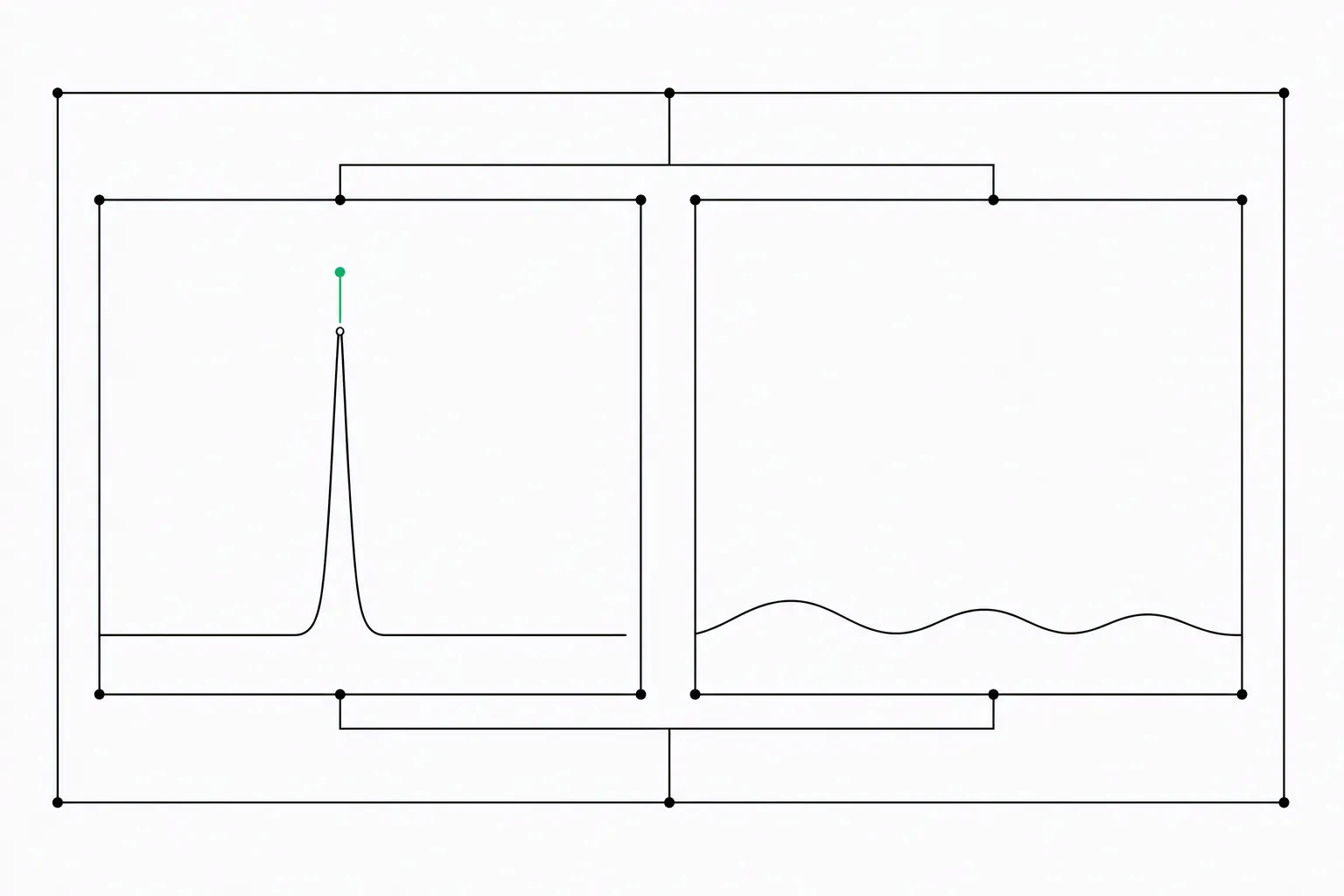
Most small businesses ask the question the wrong way. They treat Google Ads and Facebook Ads as two competing answers to the same problem, pick one, and hope it works. But the two platforms do not do the same job. One reaches people who are already looking for what you sell. The other reaches people who are not looking yet. Choosing well starts with knowing which of those two situations you are in.
This is the plain-English version: what each platform is actually good at, when a small business should start with one over the other, what each one really costs to run, and how to avoid the mistake that burns most first budgets. No jargon, no false promises about one being universally better.
The one difference that decides everything
Google Ads is demand capture. When someone types "emergency plumber near me" or "escape room for birthday party," they have already decided they want the thing. They are looking for a business to give it to. Your ad shows up at the exact moment of intent, and you pay when they click. You are not convincing anyone to want a plumber. You are competing to be the plumber they choose. Google's own explanation of how the Google Ads auction works confirms that bid and quality together decide who wins that moment, not bid alone.
Facebook Ads, which includes Instagram, is demand creation. Nobody opens Instagram to shop for your product. They are scrolling through photos and videos, and your ad interrupts that scroll. The job is harder: you have to catch attention, build interest, and create a want that was not there a second ago. When it works, it works at scale, because you are not limited to the small number of people searching today. When it does not, you have paid to interrupt people who were never going to buy. Meta's own explanation of the ad auction describes the same trade: the system is picking who is likely to care, not simply who paid the most.
That single distinction, capturing demand versus creating it, decides almost everything else: which platform to start with, how fast you see results, and how you should judge whether it is working.
When to start with Google
If people already search for what you sell, start with Google. A service with clear intent behind it, a locksmith, a dentist, a law firm, a repair shop, a venue people book, lives or dies on search. The demand is already there in the search box. Your only job is to show up for it and not waste money on the searches that look relevant but never buy.
Google tends to pay back faster too, because you are meeting a decision that is already made. That is one reason it is often the right first channel for a small business: the path from click to customer is short, and you can tell within a couple of weeks whether the searches you are buying turn into work. The risk is not that nobody clicks. It is that you pay for the wrong clicks, which is where most wasted ad spend hides.
When to start with Facebook
If your product is something people do not know to search for, Facebook earns its place first. A new kind of product, an impulse buy, a local event nobody is Googling by name yet, a brand people would love if only they had heard of it: none of that has search volume to capture, because the demand does not exist until you create it. Facebook and Instagram let you put it in front of the right people before they ever think to look.
Facebook also wins when the visual is the product. Anything you buy partly with your eyes, food, interiors, apparel, experiences, tends to sell better in a feed built for images and short video than in a line of blue text. The trade is that it usually takes longer to become profitable, because you are paying to build interest first and collect the sale second. Judge it over weeks, not days, and expect the early numbers to look worse before the creative that works rises to the top.
What each one actually costs to run
The honest answer is that the platforms cost less than the mistakes people make on them. On Google, the money leaks through loose keyword matching that pairs your ad with searches you never meant to buy. On Facebook, it leaks through weak creative and audiences that are too broad, so you pay to interrupt people who will never care.
Either platform can work on a small budget, and neither has a magic number you must clear to begin. What matters far more is how tightly the account is run: how quickly the searches that never book get turned off, how fast the ad that nobody responds to gets replaced. If you want a starting frame for the number itself, we wrote a separate piece on how much to spend on Google Ads, and the same discipline applies to Facebook: start where you can afford to learn, then let the results, not the platform, decide where the next dollar goes.
You do not have to pick just one
For most small businesses the real answer is a sequence, not a choice. Start on the platform that matches your situation, capture on Google if the demand exists, create on Facebook if it does not, prove it works, then add the second channel once the first is paying its way. Run together, they cover both halves of the buying journey: Facebook introduces you to people who were not looking, and Google catches them later when they finally search your name or your category.
The problem is that running both well used to mean learning two different systems, two reporting screens, and two sets of daily chores. That is where the AI managers change the math. They run Google and Meta from one place (Microsoft is coming soon), watch the selected account on the cadence of your plan, and handle the repetitive work on both: mining the search terms that waste money, flagging the creative that stopped pulling, and proposing budget moves toward whatever is converting now. Budget and bid changes always wait for your approval. You get the reach of both channels without having to babysit either one.
Choose the control for each move
Across both platforms the rule is the same. The AI managers read your accounts, find waste and opportunities, and explain proposed fixes with the expected impact attached. Manual asks before every write. Optional bounded Auto can only handle eligible reversible campaign-status and negative-keyword actions inside guardrails. Budgets, bids and higher-risk changes always wait for your approval, and every applied change is logged.
The cleanest way to choose is to stop guessing and look at your own accounts. Start your free account audit, connect what you are already running across every platform you connect, and see where the demand actually is before you commit another dollar to either one. The right platform is not the one someone told you to pick. It is the one your own numbers point to.
AdvisorPPC's AI managers are built using the Claude API from Anthropic. AdvisorPPC is not affiliated with or endorsed by Anthropic.